
Learn what to look for after strong winds and when to schedule an inspection
Strong wind doesn’t always leave obvious damage behind.
After a storm rolls through Columbus, a roof can look fine from the street and still have problems starting to develop. Shingles loosen. Seals break. Water finds new paths inside long before a leak shows up on the ceiling.
This guide walks through the most common signs of wind damage homeowners should watch for, starting with what you can safely spot from the ground or inside your home.
Catching these issues early keeps repairs smaller and helps you avoid surprise damage later.
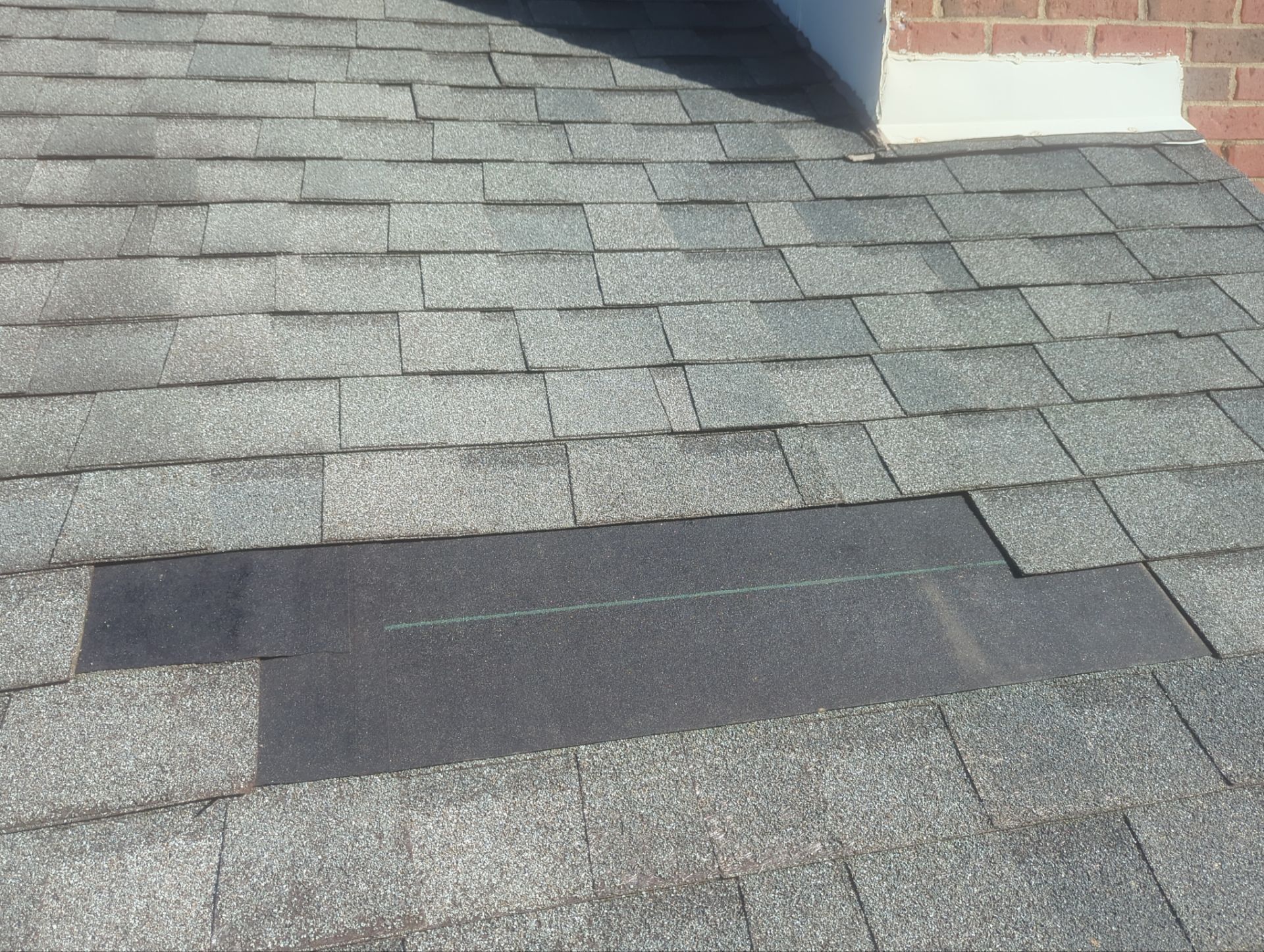
1. Missing Shingles
Missing shingles are the clearest sign that wind has already done real damage.
Strong gusts can lift shingles enough to break the seal, then tear them off completely. When that happens, the layers beneath are left exposed to rain and moisture.
From the ground, look for:
- Dark or uneven patches where shingles should be
- Shingle pieces on the lawn or around the home
- Bare spots that stand out from the rest of the roof
Even one missing shingle matters. Once wind opens a gap, water can slip underneath nearby shingles and spread beyond the original spot. That’s how a small repair turns into a bigger problem if it’s left alone.
2. Lifted, Curled, or Buckled Shingles
Shingles don’t have to be missing to be a problem. Wind often loosens them just enough to break their seal.
Lifted or curled shingles no longer sit flat against the roof. Once that seal fails, wind-driven rain can push underneath and move sideways across the roof deck.
From the yard or a window, watch for:
- Shingle edges that look raised or flapped up
- Wavy or uneven shingle rows
- Corners that won’t lie flat after the wind dies down
These shingles might still be attached, but they’re no longer protecting the roof the way they should. Left unaddressed, they’re one storm away from tearing off completely.
3. Granule Loss in Gutters or on the Ground
Granules act as the roof’s first line of defense against sun and weather. When wind strips them away, shingles wear out much faster.
After a storm, check areas where debris naturally collects. You’re looking for signs like:
- Gritty, sand-like material in gutters or downspouts
- Granules piled at the base of downspout extensions
- Dark or shiny patches on shingles where granules are missing
A small amount of granule loss happens over time, especially on older roofs. Heavy loss after a wind event points to shingles that are breaking down and losing their protective layer. Once that happens, leaks and premature aging usually follow.
4. Damaged or Loose Flashing
Flashing protects the most vulnerable joints on your roof. When wind gets underneath it, leaks often follow.
Flashing is the thin metal installed around chimneys, vents, skylights, and along roof-to-wall transitions. After strong winds, check for signs like:
- Metal that looks bent, lifted, or pulled away
- Gaps where flashing should sit tight against the roof
- Sealant that has cracked or separated around the edges
Even small shifts matter here. Flashing doesn’t need to tear off completely to fail. Once it loosens, wind-driven rain can slip behind shingles and travel inside the roof system, sometimes far from where the leak shows up indoors.
5. Dents, Cracks, or Impact Damage From Debris
High winds often carry more than just rain. Branches, loose debris, and hail can strike the roof with enough force to cause damage you can spot from the ground.
Look for signs such as:
- Dents or dark impact marks on shingles
- Cracked or broken shingle corners
- Scuffed areas where granules have been knocked loose
- Branches or debris resting on the roof after the storm
Impact damage compromises the shingle’s protective layers, even when the surface still looks mostly intact. Water can work its way into these weak spots over time, which is why this type of damage often leads to delayed leaks rather than immediate ones.
6. Soffit and Fascia Damage Along the Roof Edges
Wind doesn’t only affect shingles. Strong gusts often hit the roof edges first, which puts soffit and fascia boards at risk.
Soffit is the finished panel under the roof overhang.
Fascia is the board along the roof edge where gutters attach.
During a ground-level walkaround, look for:
- Loose, cracked, or missing soffit panels under the eaves
- Fascia boards pulling away from the roofline
- Exposed wood or gaps along the roof edge
- Pieces of trim or vented panels on the ground
Damage here matters because the roof edge needs a tight seal. When wind opens gaps along the overhang, rain can push into places that should stay dry, especially near the attic and roof decking.
7. Interior Water Stains or Attic Moisture
Some of the clearest signs of wind damage show up inside the home, not on the roof itself.
After a storm, take a quick look at ceilings, walls, and the attic if you can access it safely. Watch for:
- Yellow or brown stains on ceilings or upper walls
- Damp insulation or darkened wood in the attic
- Drips, wet spots, or a musty smell after heavy rain
- Daylight visible through the roof decking
Interior moisture usually means wind lifted shingles or flashing just enough to break the roof’s seal. Water may enter far from where the stain appears, which is why professional inspections are so important after wind damage.
What To Do If You Spot Wind Damage
Once you notice signs of wind damage, the next steps matter. Quick action helps prevent leaks and keeps minor issues from turning into bigger repairs.
Start with a safe, ground-level check. Use binoculars or your phone’s zoom and avoid climbing onto the roof, since wind-damaged areas can be unstable.
Then focus on three clear steps:
- Document the damage: Take photos of missing or lifted shingles, bent metal, debris on the roof, interior stains, and any attic moisture you notice.
- Limit further exposure: Move belongings away from leaks and place buckets or towels to control active drips until repairs are made.
- Call a local roofing professional: A trained inspection can uncover hidden damage and confirm whether repairs or temporary protection are needed.
Wind damage is not always obvious from the ground. A professional inspection helps catch problems early, before water gets inside.
Schedule a Free Wind Damage Inspection With Van Martin Roofing
Wind damage can look minor from the ground and still cause leaks later. A few lifted shingles or loose flashing can let water in the next time rain blows sideways.
Van Martin Roofing offers free roof inspections for Columbus homeowners, with clear photo documentation and straight answers on what needs attention now.