
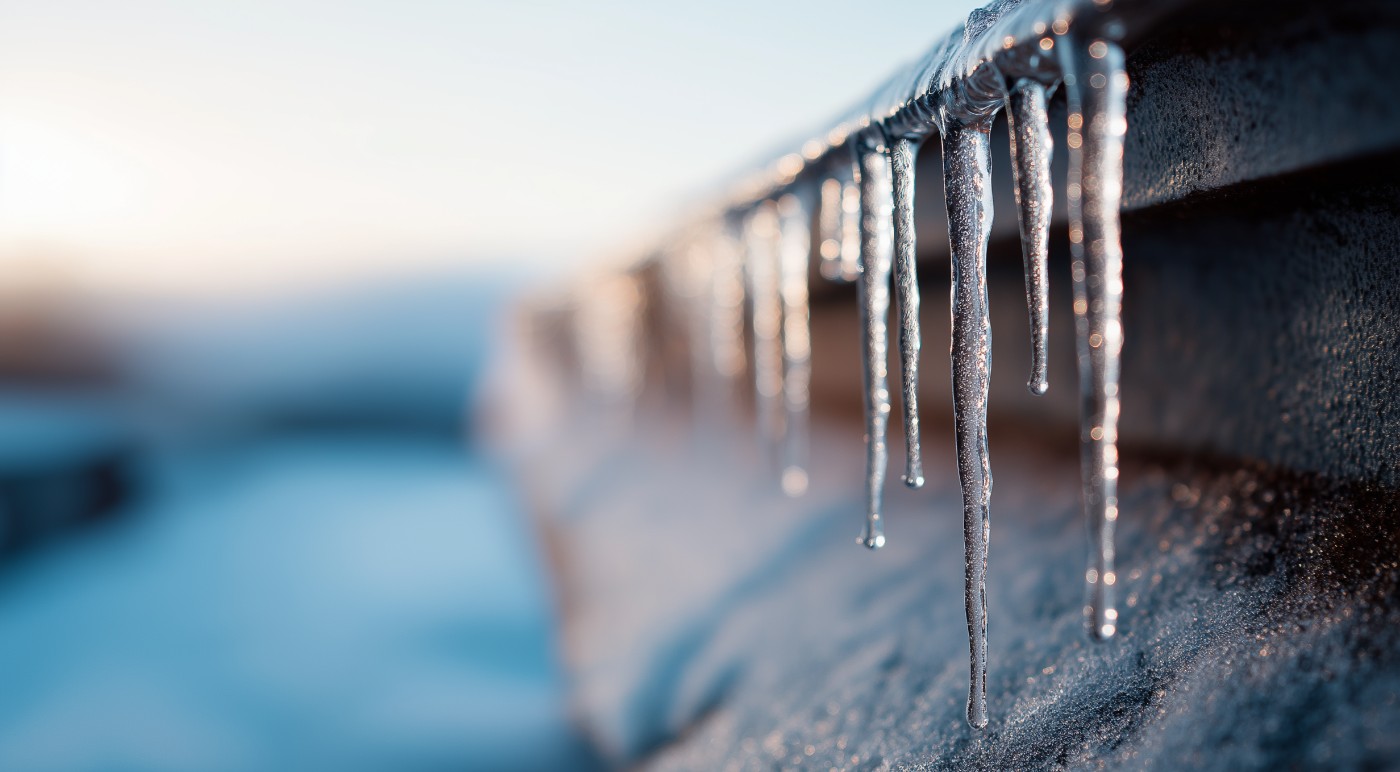
Common concerns like ice dams, flashing leaks, and frozen gutters pulling away can compromise a home’s protection. Let’s walk through what you need to know to safeguard your home before winter takes hold.
Understanding Ice Dams and Their Risks
Ice dams form when snow on your roof melts during the day because the upper sections of the roof are warm, often due to heat escaping from your home’s interior. This meltwater runs down to the colder roof edges or eaves, where it refreezes as temperatures drop at night. The freezing water builds up, creating a dam that blocks further snowmelt from draining properly.
Because the water has nowhere to go, it begins to back up under shingles and into the roof decking. This trapped water can leak into your attic and walls, causing damage like rotted wood, mold growth, ruined insulation, and stained ceilings. The damage often goes unseen until it becomes extensive and costly to repair.
Ice dams also add weight to your roof edges and gutters, potentially pulling gutters loose or damaging fascia boards. Homes with improper attic insulation or ventilation are especially susceptible, as warm air leaks accelerate roof surface warming.
- Ice dams form because of uneven roof temperatures caused by heat loss.
- Water trapped behind ice dams can cause structural damage and mold.
- Proper attic insulation and ventilation help maintain uniform roof temperatures to prevent ice dams.
Columbus’s variable winter weather, with freeze-thaw cycles and heavy snowfalls, makes ice dam formation a common and serious roofing concern. Keeping your roof in good condition and ensuring your attic is properly insulated and ventilated are your first lines of defense.
Flashing Issues: Your Roof’s Defensive Frontline
Flashing acts like your home’s first-string defense line, sealing joints to keep water out. When flashing ages or is improperly installed, leaks can occur around chimneys, vents, skylights, and roof valleys.
Normally made of metal, flashing is installed at key roof seams and transitions to create a waterproof barrier. Over time, flashing can degrade due to rust, corrosion, cracking, or loosening of sealants, all of which open pathways for moisture intrusion. This makes flashing a critical component in preventing water from sneaking under shingles and damaging your roof’s underlying structure.
Common flashing issues include gaps caused by weather-related movements, loose nails or fasteners, and broken or missing sections after severe storms. In Columbus, where temperature swings and harsh winter conditions prevail, flashing can experience accelerated wear and must be regularly inspected.
Signs Your Flashing Needs Attention
Watch for water stains inside your home or missing caulk around seams. You might also notice rusting or bubbling paint near flashing areas, which are subtle signs flashing is compromised. Early detection prevents water from blitzing in and safeguards your home’s structure from costly damage.
Gutters and Their Role in Winter Roof Health
Gutters may seem like a small detail, but they play a major role in keeping your roof and home safe during colder months. When gutters become clogged with leaves, twigs, and other debris, water can’t flow freely. This causes it to pool and freeze, forming dangerous ice buildups known as ice dams in your gutters themselves.
These icy blockages add weight to gutters, which can cause them to pull away from your roofline or get damaged. Furthermore, water that overflows from blocked gutters can seep into your roof edges, fascia boards, or even your foundation—leading to leaks, wood rot, and costly repairs.
Maintaining Your Gutters for Winter
Preparing your gutters before freezing temperatures arrive is essential: remove all debris thoroughly, check that gutters and downspouts are securely fastened, and ensure water can flow unobstructed through the system. Professional gutter cleaning and maintenance can also extend their lifespan and improve how your home handles winter weather.
- Clogged gutters block proper drainage and cause ice buildup.
- Heavy ice in gutters can damage your roof edges and fascia.
- Timely cleaning and inspection prevent winter water damage.
- Pro gutter maintenance can identify minor issues before they escalate.
Protecting Your Columbus Home Through Winter
Columbus weather can turn fast, but you’re not in this alone. We inspect. We protect. We guarantee your roof stays leak-free, long-lasting, and ready for every winter challenge. Our experienced teams ensure your roof and gutters are prepared to handle ice dams, flashing leaks, and snow loads, giving you peace of mind all season long.
Thank you for trusting Van Martin Roofing—together, we’re securing your home and community, one roof at a time.