
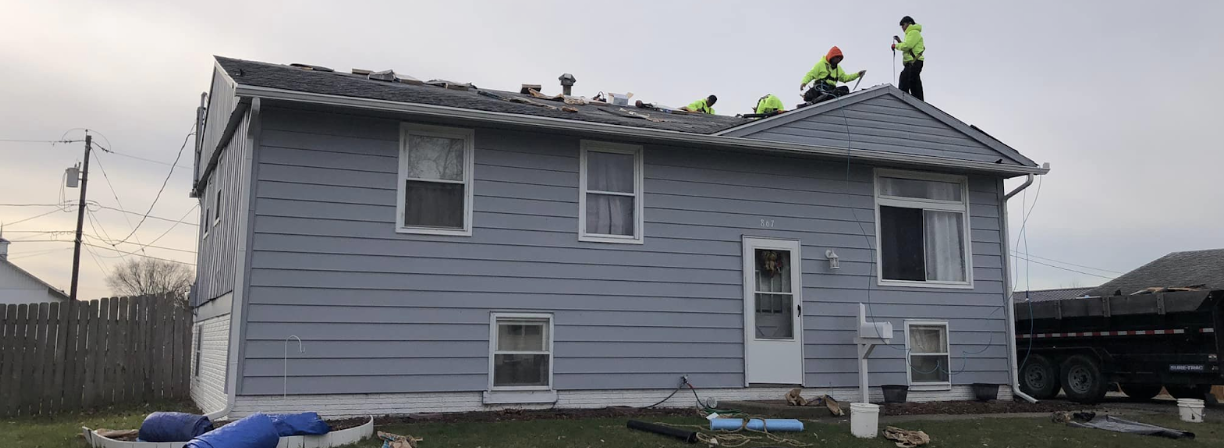
Hail Damage Claims
|
by snation
Why Roof Insurance Claims End With No Payout
What is really included in the price you've been quoted for a new roof, and why is that so important?
5 MINUTES
If you’ve ever filed a roof insurance claim dand it ended with a $0 payout, you aren’t alone.
When we pulled the public data on homeowners' claims, we saw many homeowners faced claims closed with no payments. As homeowners, we’d expect the opposite, but data doesn’t lie.
This is information on homeowners' insurance, specifically the type of policy people expects to help with roof damage from wind, hail, falling debris, and storms.
What “Claims Closed With No Payment” Really Means
The metric we are using to present data and information in the following article is “claims closed with no payment.”
For many homeowners, a claim that closes with no payment feels no different than having a roof insurance claim denied, especially when storm damage repairs still need to be completed out of pocket.
This means: the claim was filed, processed, closed… and the homeowner received $0. This doesn’t always mean formally denied, but the effect for the homeowner is the same: damage and no check. (Weiss Ratings)
According to data analyzed from the National Association of Insurance Commissioners (NAIC):
-
- 2004: 25.7% of claims closed without payment
- 2023: 39.0%
- 2024: 42.1%
That means in 2024, about 4 out of 10 homeowners' insurance claims ended with no payout. (Weiss Ratings)
Homeowners’ Insurance Payout Rates by Major Companies
Here’s how some of the largest homeowners' insurance providers stack up when it comes to claims closed with no payment in 2024:
These are large homeowners' insurance providers, and the percentage of claims closed with no payment. Again, not “approved” or “denied.” Simply, “Did you get paid or not?” Because the label doesn’t matter when you’re met with damaged property and an empty hand.
Here's what the data tells us:
-
- Allstate Vehicle & Property — 50.9%
- Allstate Insurance Company — 49.8%
- USAA — 49.5%
- USAA Casualty — 48.7%
- Farmers Property & Casualty — 45.6%
- Universal Property & Casualty — 40.1%
These percentages reflect claims closed with zero payout, not necessarily “denied” under formal definitions. Depending on who you’re with, you’re looking at 4 out of 10, in some cases 5 out of 10 claims ending in $0.
This is the part where you begin to think, “Well, why am I paying for this at all?” For context, some major insurers are lower:
-
- State Farm Fire & Casualty — 31.9%
- American Family Mutual — 36.6%
- Nationwide Mutual — 16.6%
https://youtu.be/6FCWgWucMDQ?si=FwqTrvIkb2DH7ET2
Why So Many Homeowners Get $0
1. Roof Claim Costs Have Skyrocketed
Roof repair and replacement costs totaled nearly $31 billion in 2024, up about 30% since 2022, according to Verisk data. High claim costs are leading insurers to tighten payout criteria. (Verisk)
2. Higher Deductibles and Narrower Coverage
Insurers have increased deductibles and restricted coverage terms — meaning even if damage exists, it can fall under the deductible or not be covered, leaving homeowners with $0. This trend is widely reported in insurance industry coverage. (Houston Chronicle)
3. Disputes Over Damage Cause: Wear & Tear vs. Storm
One of the most frequent reasons claims receive no payout is the insurer attributing damage to wear and tear instead of a covered peril (like hail or wind). This common battle can drastically reduce payouts or result in zero payout.
The Claim Trap: Why Filing Can Still Hurt
This is the part most people don’t think about:
Even if the claim ends in $0, it can still show up in your claim history.
So, when it’s time to renew or shop around, that can create friction, meaning filing a claim without knowing what you’re walking into can actually backfire.
What Homeowners Should Do Before Filing
Before you file:
-
- Know your deductible
- Know your roof’s age and condition
- Document everything immediately
- Check whether damage is widespread or localized
- Review policy exclusions (wear and tear, cosmetic issues, etc.)
- Get a qualified roofing inspection
- Don’t rush to file without evidence
The goal isn’t to avoid claims; it’s to prepare a strong one. With the right information and proof, you’re far more likely to get a payout.
Final Takeaway: Confidence Through Knowledge
The goal isn’t to never file. The goal is to file smart, with proof, and avoid being denied. Having the correct information to support your claim and taking the necessary steps prior to filing can save you from becoming a statistic.
If you've had a roof insurance claim denied or received a $0 payout, understanding the reasons behind that decision can help you build a stronger case and avoid similar issues in the future.
With about 42% of homeowners claims in 2024 closing with no payment, many homeowners are learning that coverage doesn’t always work the way they expect. Deductibles, policy exclusions, and the line between storm damage and wear-and-tear are often where claims fall apart.
If you’re unsure whether your roof damage warrants an insurance claim, our team can help. Contact us for a professional inspection and honest assessment.
More from the Learning Center
Uncategorized
by snation
Why Spring Roof Inspections in Dayton Matter
Why You Need a Roof Inspection in Dayton This Spring As winter fades in Ohio, spring roofing becomes a top priority for homeowners in Dayton. Fre...
READ MORE
3 MINUTES
roof inspection
by snation
When Do You Need Roof Repair in Dayton, OH? Top 5 Signs to Watch
READ MORE
4 MINUTES
Ready for a roof that doesn't
keep you up at night?
Free inspections across Dayton, Columbus, and Cincinnati. Most get scheduled within 48 hours.