
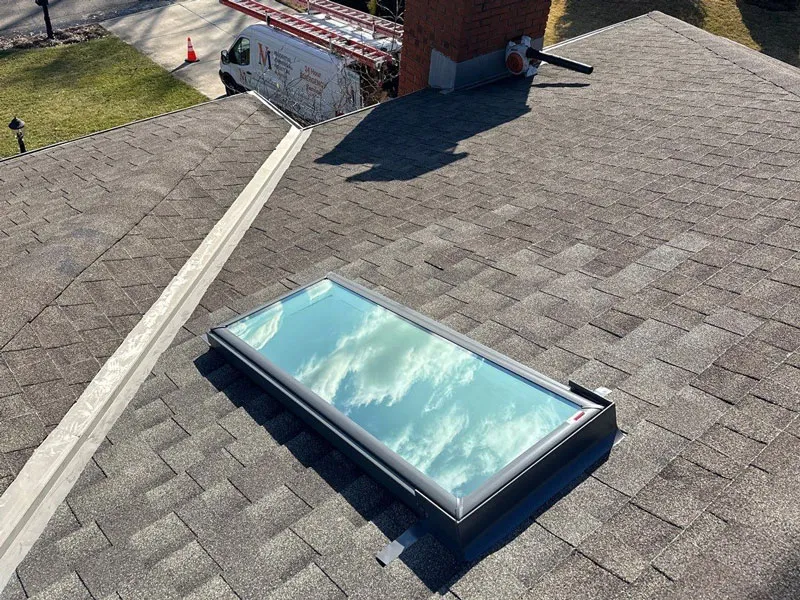
When a skylight starts leaking, the answer isn’t always obvious.
A small repair might stop the problem, or the skylight may have reached the end of its life.
Knowing which one you’re dealing with saves time, money, and frustration. Below, we’ll walk through the signs that point to a repair and the signs that usually mean replacement makes more sense.
What Skylight Repair Actually Means
A skylight repair fixes the seal around the unit, not the skylight itself.
Most repairs focus on the areas where water sneaks in first. That usually includes replacing worn flashing, resealing gaps around the frame, or correcting an installation detail that failed over time.
Repairs make sense when the skylight window is still in good shape and the leak comes from one clear source. In those cases, stopping the water at the perimeter often solves the problem without touching the rest of the roof.
The key question is whether the skylight itself is still sound.
When a Skylight Repair Usually Makes Sense
Some skylight issues stay contained and respond well to a targeted fix.
Repairs are often the right call in situations like these:
- Leaks tied to loose or damaged flashing
- Gaps or cracks in the exterior sealant
- Water showing up only during wind-driven rain
- A newer skylight with no visible glass damage
When the glass is intact and the skylight hasn’t aged out, repairing the surrounding materials often restores a watertight seal. Catching these problems early keeps the fix straightforward.
What Skylight Replacement Involves
Replacement addresses the skylight as a full unit.
This process removes the existing skylight, checks the surrounding roof opening, and installs a new unit with fresh flashing and underlayment. Everything works together as one system instead of relying on older parts to keep sealing.
Replacement becomes the better option when the skylight itself starts failing. Once the window, frame, or seals wear out, repairs tend to hold only temporarily.
A new skylight brings reliability back instead of chasing the next leak.
Signs a Skylight Has Moved Beyond Repair
Certain patterns point toward replacement rather than another patch.
Watch for signs like these:
- Fogging or moisture trapped between glass panes
- Cracks or visible damage in the skylight frame
- Leaks that return after past repairs
- Interior drywall damage spreading beyond the skylight opening
- A skylight that’s twenty years old or more
When several of these show up together, repairs usually turn into short-term fixes. Replacement breaks that cycle and prevents repeated ceiling damage.
How Age Changes the Decision
Skylight lifespan matters more than most homeowners realize.
Older skylights often lack modern sealing systems and energy-efficient glass. Even if one leak gets fixed, new failure points tend to follow as materials continue to break down.
Newer skylights have better flashing designs and tighter seals. Those units are much more likely to respond well to repair when problems stay isolated.
Age alone doesn’t force replacement, but it weighs heavily in the decision.
How Skylights Affect Energy Bills and Comfort
Older skylights can quietly work against you.
Single-pane glass, worn seals, or outdated frames often let heat escape in winter and allow excess heat in during summer. That makes the room below feel drafty, stuffy, or hard to keep comfortable, even when the rest of the house feels fine.
Newer skylights perform very differently. Modern glazing reflects heat, blocks UV rays, and seals more tightly against air leaks. The result is steadier indoor temperatures and less strain on your HVAC system.
When comfort issues or rising energy bills trace back to the skylight area, replacement often solves more than a leak. It helps the space feel usable again, year-round, without fighting the thermostat.
Repair vs. Replacement: Questions to Ask Yourself
When the answer still feels unclear, these questions usually bring it into focus:
- How old is the skylight?
- Has the leak been repaired before?
- Does moisture show up inside the glass itself?
- Is the damage limited to one area or spreading?
- Do you want a long-term fix or a short-term solution?
A skylight that checks several of these boxes often points toward replacement. One that doesn’t usually has more life left in it.
Getting a Clear Answer Without Guessing
A professional inspection removes the uncertainty.
A roofer checks the skylight, the flashing, and the roof area around it to pinpoint where water enters. That full view helps separate a simple sealing issue from a skylight that has worn out.
Van Martin Roofing offers free skylight inspections for Dayton homeowners. You’ll get a clear explanation of what’s causing the leak and whether a repair will hold or replacement makes more sense. No pressure. Just straightforward guidance so you can move forward confidently.
Key Takeaways
- Skylight repairs work best when the issue is isolated, like a minor leak or failed seal.
- Replacement makes more sense when skylights are old, drafty, or causing repeated problems.
- Condensation between panes, recurring leaks, and noticeable drafts often point toward replacement.
- Newer skylights improve energy efficiency and indoor comfort, not just leak protection.
- A professional inspection helps confirm whether a repair will last or if replacement is the smarter move.
Homeowners Also Ask:
Can a leaking skylight always be repaired?
Not always. If the leak comes from flashing or a small seal failure, a repair can work. Leaks tied to failed glass seals or aging frames usually come back unless the skylight is replaced.
How long do skylights typically last?
Most skylights last about 15 to 25 years. Older models often fail sooner due to worn seals or outdated glass that can’t handle temperature changes as well.
Is skylight condensation a sign of a leak?
Condensation between glass panes usually means the seal has failed. That isn’t a roof leak, but it does mean the skylight has lost its insulating value and often needs replacement.
Will replacing a skylight make my home more energy efficient?
Yes. Modern skylights use better glazing and tighter seals, which help regulate temperature and reduce drafts compared to older models.
Can a skylight be replaced without replacing the roof?
In many cases, yes. A roofer can replace the skylight itself as long as the surrounding roofing materials are still in good condition.